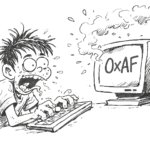
 This week a colleage of mine shared an interesting video describing AI (mainly Suno) as problematic to the musical industry in the sense that musicians will become less and less skilled in making truly original music. It coins the term “de-skilling”, which perfectly captures something I also see in the software development area, even though it is beautifully hidden by the “impressive results”.
I spent the past few weeks vibe-coding with Codex and Claude at work, not only because we need to stay on top of new developments in the field, but more importantly: trying to figure out what this means for our daily work, the future of the company, and the meaning of life. Because after money, one of the most important aspects of your job is that it gives you purpose (see the Pyramid of Maslow).
Deskilling very much resonates with the eerie feeling I am having the last weeks when playing with Claude and Codex. I would even say that it describes a large part of the new generation of programmers (don’t take this personal, read on).
Software development is a technical area where the industry is always “abstracting” details further and further away. Because of the fast developments in the field, schools also tend to drop certain “old topics” from the curriculum. I see this in younger developers, who no longer know what an Arithmetic Logic Unit is, or even list 2 or 3 sorting algorithms (let alone reproduce them in code). Schools are moving away from “understanding” to “getting quick results”.
For producing software, developers have moved from tediously writing (and even braiding rope memory) assembly code, to writing C, and then Java and now Kotlin. This progression has continuously abstracted and hidden the lower complexities and replaced them with mental models which are easier for humans to understand like Object Oriented programming. In this sense, AI is the next “level” where I see it as a tool that further abstracts the details of programming, but with one very big caveat: you have to understand the code in order to be able to review it and verify that it is actually doing exactly what you expect it it should do. As Birgitta Böckeler of Thoughtworks writes in this article about context engineering: “…as long as LLMs are involved, we […] choose the right level of human oversight for the job”.
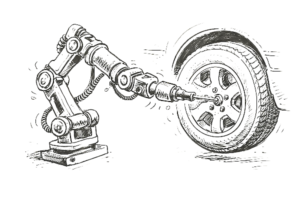 I see AI in coding as a “robot” in a car factory: It can do repetitive, existing, efficient actions quickly. Coding of most applications in our specific market is “more of the same”, and solves the holy grail every developer regularly has when typing “boiler plate code”. Typing boiler plate code is always seen as bad, but I wholeheartedly disagree with that. Yes it takes time but it is good for your brain because it is a relatively low cognitive workload which allows your brain to think about your next steps while not being distracted by other events or things happening around you. It is the “fidget toy” of programmers.
AI is not “inventing new things”. The only reason Claude or Codex feels “smart” is because it has “seen” more patterns than you, and can complete your existing code with those patterns quicker than you can think up or search online. It might feel smart to you, but it is just feeding you stuff that was already invented but simply not known by you.
Truly new, carefully crafted products like TigerBeetle for instance, is very unlikely to be created completely with AI. Tigerbeetle’s distributed mathematical ledger is a new idea, executed in a specific manner, finding creative ways to improve speed while at the same time being resilient to partial system failure. It solves something which is usually seen as a mutualy exclusive problem which is only seldomly prefectly solved (RAID 5 and other redundant sharding solutions).
Based on their experience and background, the Tigerbeetle team wrote a nice style document which is, sadly, only partly valid for the majority of industrial coders. In most cases, code is not “art” or “poetry”. We don’t go into “uncharted territory” with just our wits and no libraries to go by. We don’t get the time to “do things right” because customers don’t want to pay for the extra hours, and they cannot be convinced by the “it will be cheaper in the long run” story.

Sadly, most programmers are not in the “inventing” business, although they may think they are. Most of us are “production workers”, where we churn out more of the same code to produce slightly new versions of ugly business software to fit an unoriginal business case. There is not much novelty or creativity in code for medium to large businesses who are basically competing with eachother by doing the same thing in a slightly different way.
AI in software development is comparable the industrial revolution, the bringing of tools to speed up production, not to nesceseraly aid in creativity. This is sad in the same way industrial revolution was sad: It kills a big part of the craftsmanship many workers pride themselves with. For me in particular, I tend to be fairly good in recognizing code as being written by a certain colleague. Code usually reflects the way people think, and I tend to be able to see those patterns and more often than not I am correct. I also pride myself in being able to simplify code while making it do exactly the same, or even more/better/faster. This is partly because of my classical education where I know what patterns are detrimental to readability and/or performance, and my tendency to rewrite something if it is hard to read. Most code is written for your colleagues more than it is written for the computer.
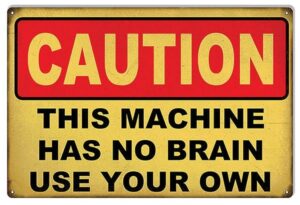 As during the industrial revolution, people need to learn to use the new tools for the right job, and also in a safe manner. At the start of the industrial revolution big machines killed people because people were unexperienced and didn’t see the danger. I think this will hold the same for the current AI revolution. AI models and AI generated code brings new dangers in several forms. Currently, the most dangerous one is that AI “sounds convincing” and people tend to be too lazy to check the correctness of generated answers, be it an answer to a calculation, or generated code.
This will lead to big safety problems. AI is a good target for a supply chain attack, and since the generated code will not be reviewed critically on simple safety problems, I predict that soon we will have a catastrophical failure with a big bank or ensurance company where somebody “vibe coded” a critical part of the security, or someone used their Warp terminal to connect to a production server with root access.
I’m not at all against powerful tools, I think they are impressive and like to play with them. But I wholeheartedly believe that powerful tools should be used by skilled people who thouroughly understand the correct application, inner workings and safety precautions these tools bring. Right now that is clearly not the case, where managers “vibe code” an application in a weekend and think it is production ready, or kids vibe-coding clones of iPhone apps and steal the revenue of a well crafted original. And all this frivolous vibe coding is carelessly adding to global warming, and generating a big pile of electronic waste.
Before things settle down, this will shake up not only the industry, but the whole world. We see this now where people think it is “funny” to generate a lifelike fake video, not understanding the impact this has on people seeing it and thinking it is real. All this is bound to go horribly wrong before it can be properly addressed with safeguards which will become “common sense”.
I guess we are currently living in interesting times.