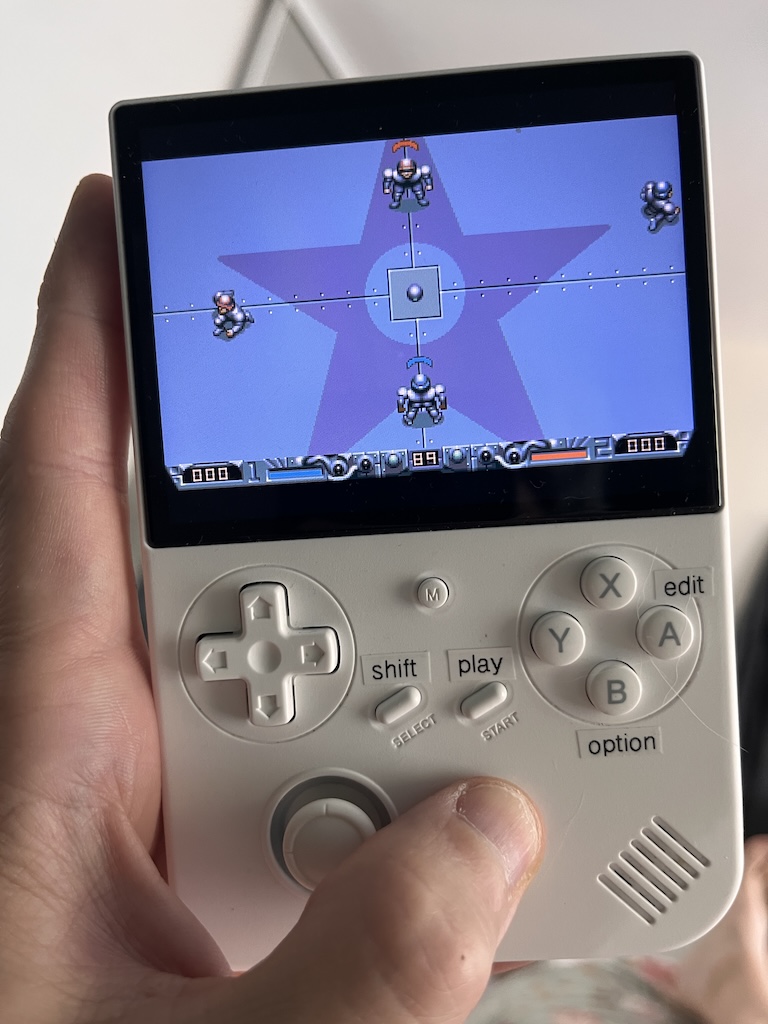
 You might wonder how I got here. I was looking into chiptune music, and a colleague recommended Jeremy Blake’s music, which is indeed awesome if you are into this stuff. I recommend listening to his album called “Superstructures”. This album is created using a tracker, similar to the trackers I used on the Amiga 500 back in the days. My favorites were Protracker and later when I had a MIDI keyboard Octamed. It turns out Jeremy is using a Dirtywave M8, which can also be built using open source software and one of these handheld gaming consoles. Houston we have a project!
Category: Hardware
Volkswagen Up! Garmin Conversion
 In their infinite wisdom and search for an affordable quality infotainment and navigation, Volkswagen partnered with Garmin. That would nog have been a big disaster, but in their search for a budget solution they put the standard Garmin/Navigon screens on a little arm that protrudes out of the dashboard not unlike a scene from the movie “Alien”. If you have an (otherwise fine) Volkswagen Up!, e-Up!, Skoda Citigo, or Seat Mii (which are basically the same cars), see how I converted a Garmin holder into a proper Magsafe adapter, holding your phone and charge it without extra wires running over your dashboard.
Remove DataTool Alarm
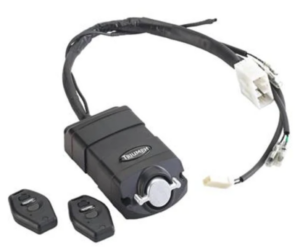 If you have a Triumph Motorcycle and the Datatool evo, S3 or S4 alarm gives you headaches, there are two things to know:
- The alarm is virtually irrepairable because it is filled with silicone
- There is an easy trick to remove/disable it without permanent damage to the bike or the alarm.
Apple Watch 8 Uninstalled
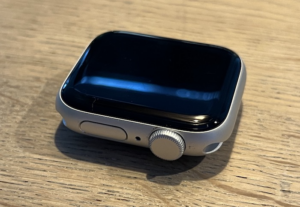 After wearing a simple Pulsar analog watch for years, and then not wearing a watch at all, I convinced myself a month ago that an Apple Watch 8 would be an improvement. Part of that decision was based on my hipster IT colleagues being surprised I was not wearing a smartwatch. I also noticed my girlfriend practically can’t live without hers, and then I saw this endless stream of youtube videos with raving reviews of (lets be honest) pretty biased people.
Reading an ISKRA AM550 P1 Port with a Pi
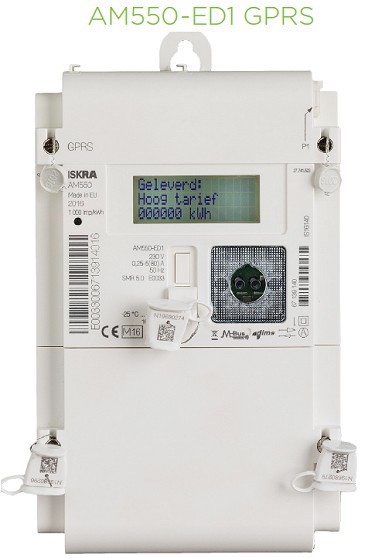 Although I am the guy with a soldering iron and a bit of software development experience, I am not a fan of the “internet of things”, “smart meters” or smart anything really. Not because I don’t like technology, but because of the potential security and privacy problems it brings with it. That said, because of some unfortunate events I now have a smart meter my home. So when life gives you lemons, you make Pi!
I’ve got an AM550 Smart meter with a P1 port. Seeing all the online content and suggestions about reading your smart meter, I decided to have an hour of fun trying to read the P1 data. Here’s how I did it:
Interdigital Bandpass for RTL2832U Receiver
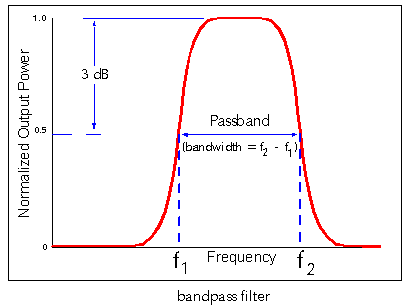 Building a receiver for a voice repeater system in this area I set up a thumbsat receiver connected to a Raspberry Pi. The receiver is part of the repeater system to widen it’s receiving range. However, the performance turned out not to be too optimal. I guessed that the GSM and Wifi signals around here could cause the RTL2832U to overload, so I decided to build an intedigital bandpassfilter using Ajarn Changpuak‘s excelent interdigital bandpass filter calculator.
Make the ESP8266 talk 9600 baud
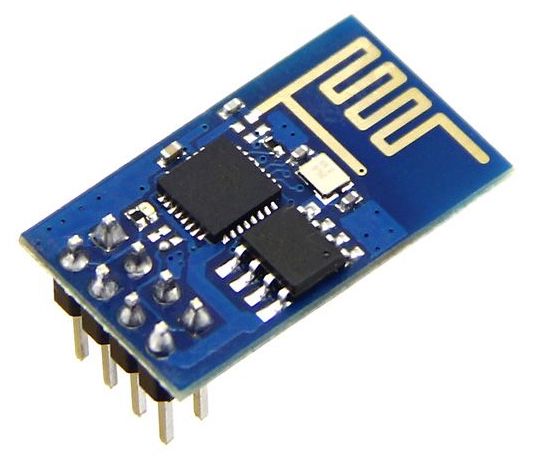 The default serial speed on the ESP8266 WiFi chip is 115200 baud. If you connect this chip to an Arduino and want to use SoftSerial to talk to it, it will not work. The SoftSerial library is limited to 9600 baud because of hardware limitations of the Arduino. If you want to talk to the ESP8266 with an Arduino at lower speeds, you need to tell the ESP8266 to slow down.
Seeed ESP8266 WiFi Breakout Board Pinout
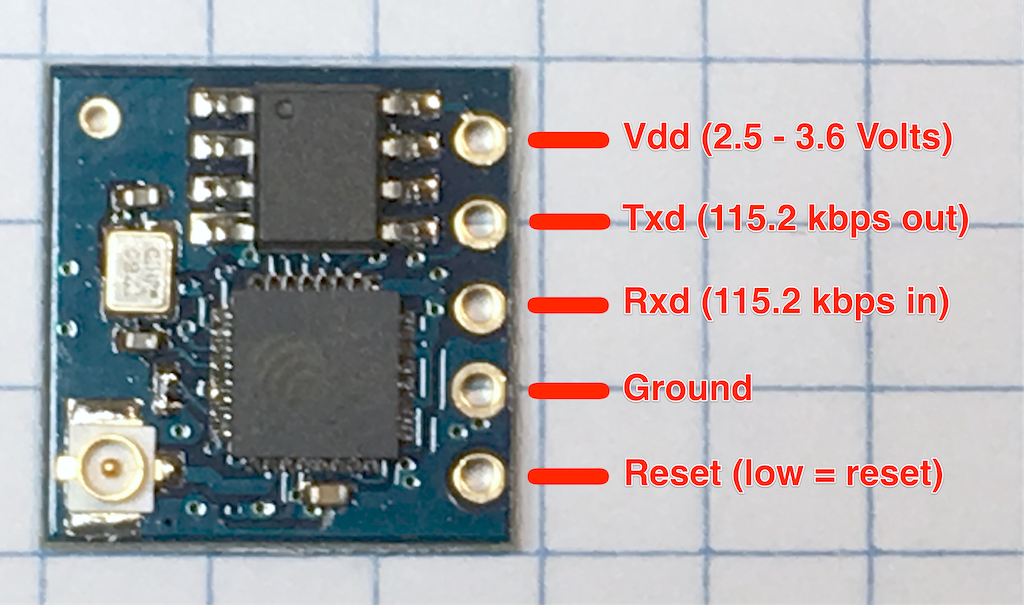
This is the pinout for the Seeed WiFi ESP8266 breakout board. Please be careful, it only accepts 3.3 Volt nominal input voltage and logic. Putting 5 Volts on any of the pins may permanently damage the chip.
The ESP8266 on this board is programmed to do serial communications at 115.2 kilobaud, and accepts AT commands.
Designing a Fox-hunt antenna
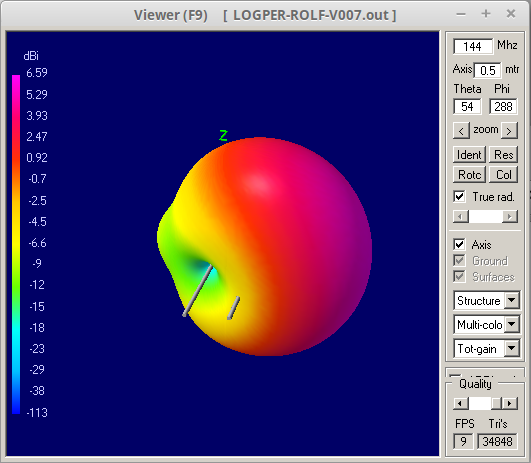 Many years ago, I used to do some radio fox hunting with cars. Usually these hunts are at night to make it more exciting, and can be great fun. As I got older I lost interest and moved on to other things. But last year, I decided to have a go at a popular balloon fox hunt on 144MHz. This is quite a large scale and professionally organized fox hunt by Dutch Radio Amateurs.
Measuring Coax Length and Loss
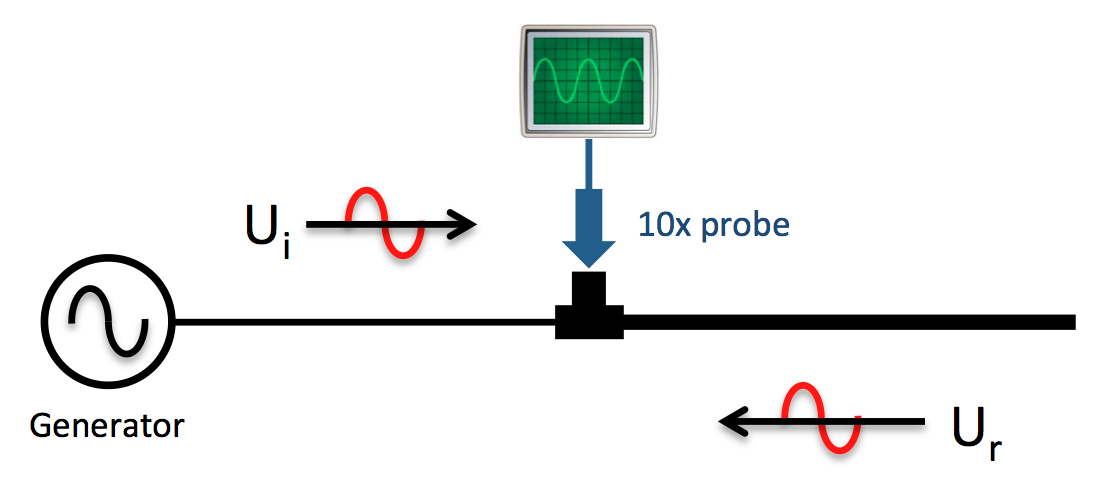
 Ever wondered how well your 50Ω coaxial cable is working? If you have a reasonably fast oscilloscope, preferably up to 100MHz and a signal generator which can generate short bursts, you can measure not only the length of your cable, but also the return loss at a certain frequency. From that, we can learn the attenuation of the cable.
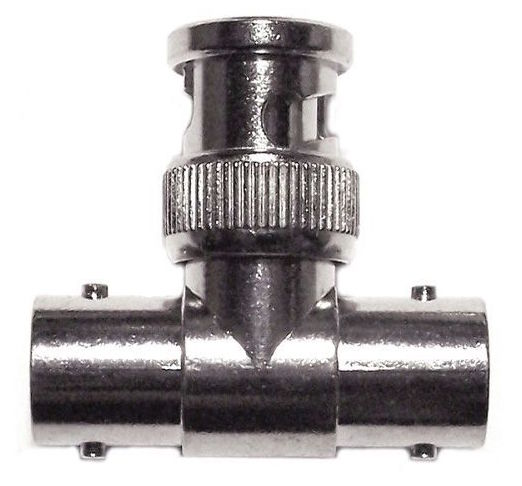
This blog post describes the classic time domain reflection measurement using the following setup: