Skip to content

www.rolfje.com

Author: rolfje

Seeed ESP8266 WiFi Breakout Board Pinout

Posted on 2017-01-01 By rolfje No Comments on Seeed ESP8266 WiFi Breakout Board Pinout
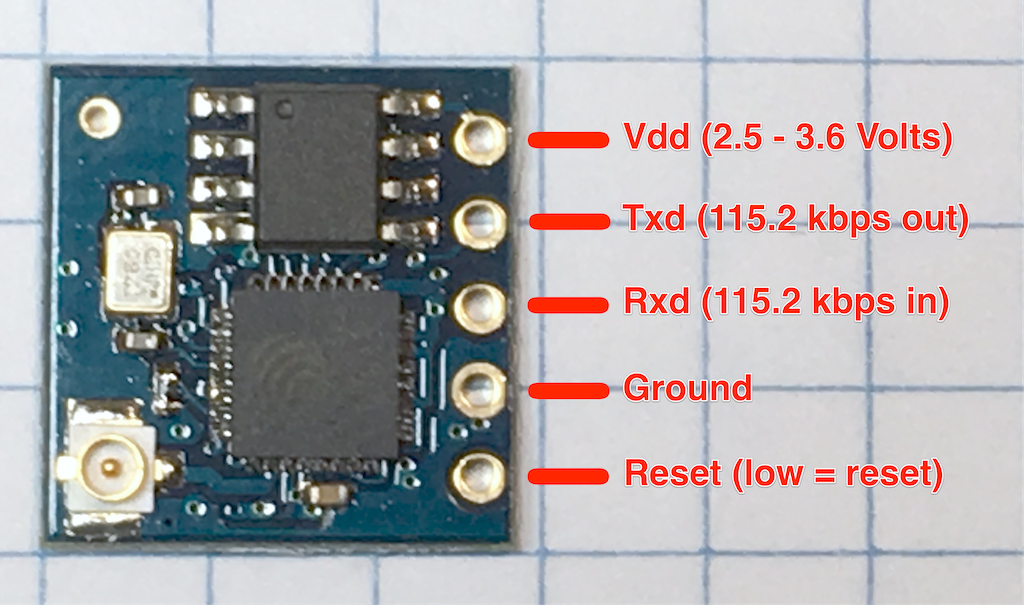
WiFi Serial Transceiver Module Breakout Board w& ESP8266 pinout

This is the pinout for the Seeed WiFi ESP8266 breakout board. Please be careful, it only accepts 3.3 Volt nominal input voltage and logic. Putting 5 Volts on any of the pins may permanently damage the chip.

The ESP8266 on this board is programmed to do serial communications at 115.2 kilobaud, and accepts AT commands.

Hardware

macOS Sierra SSH “Permission Denied”

Posted on 2016-11-12 By rolfje 1 Comment on macOS Sierra SSH “Permission Denied”

keychain-mac-tutoIf you used DSA keys to log in to your SSH server and have upgraded your client machine to macOS Sierra (or OSX Sierra if you like), you probably ran into this problem:

client$ ssh -p 8123 george@10.0.0.10 -i ~/.ssh/id_dsa 
Permission denied (publickey).

The answer to this problem is replacing the DSA key with an RSA key, but how do you do on the server when your only means for connecting is the OSX client machine you just upgraded? Here’s how:

Read More “macOS Sierra SSH “Permission Denied”” »

Apple

Designing a Fox-hunt antenna

Posted on 2016-06-19 By rolfje No Comments on Designing a Fox-hunt antenna

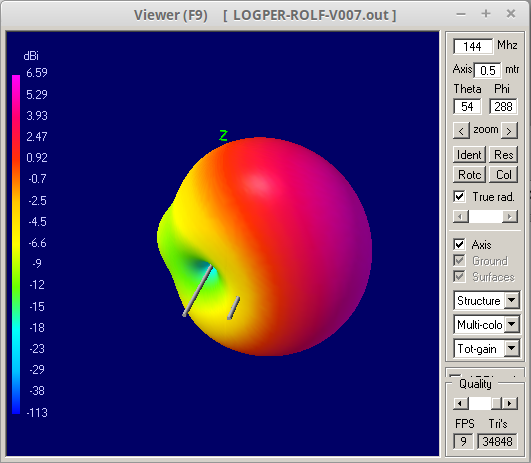
3d radiation patternMany years ago, I used to do some radio fox hunting with cars. Usually these hunts are at night to make it more exciting, and can be great fun. As I got older I lost interest and moved on to other things. But last year, I decided to have a go at a popular balloon fox hunt on 144MHz. This is quite a large scale and professionally organized fox hunt by Dutch Radio Amateurs.

Read More “Designing a Fox-hunt antenna” »

Hardware, Workshop

Measuring Coax Length and Loss

Posted on 2015-11-01 By rolfje 4 Comments on Measuring Coax Length and Loss

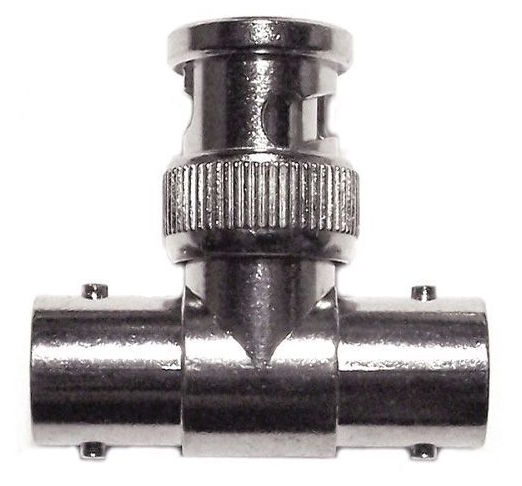
100-1015 BNC T ConnectorEver wondered how well your 50Ω coaxial cable is working? If you have a reasonably fast oscilloscope, preferably up to 100MHz and a signal generator which can generate short bursts, you can measure not only the length of your cable, but also the return loss at a certain frequency. From that, we can learn the attenuation of the cable.

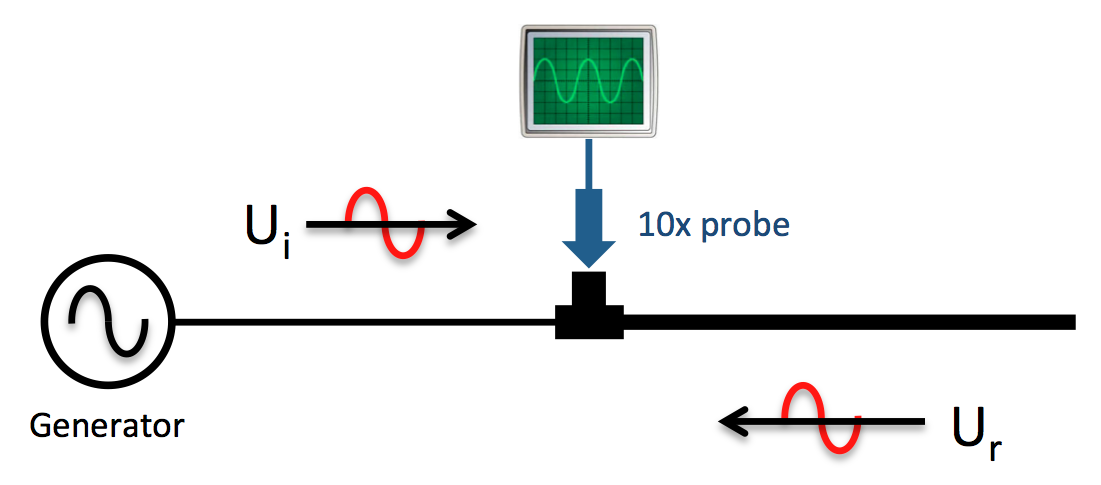
This blog post describes the classic time domain reflection measurement using the following setup:

Measuring TDR

Read More “Measuring Coax Length and Loss” »

Hardware

How to get your users to install JCE

Posted on 2015-09-04 By rolfje 3 Comments on How to get your users to install JCE

220px-Lorenz-SZ42-2In every Java project where I need to do strong cryptography, I run into these dreaded unreadable stacktraces which send you into the woods. After a long search I usually discover that the Unlimited Strength Java Cryptography Extensions are not installed. To prevent frustration of users of your software, you can simply add a bit of informative logging to help him/her solve it when the solution is known.

Read More “How to get your users to install JCE” »

Uncategorized

Ashley Madison in perspective

Posted on 2015-08-24 By rolfje No Comments on Ashley Madison in perspective

lady justiceHowever I disagree with sites like Ashley Madison and the way its owners scam people, last week I have noticed something far more disturbing. As I understand, Ashley Madison was charging people for their profiles to be deleted, and then did not (promptly) delete them. I guess some of it’s “hackers” got caught up in this and decided to attack Ashley Madison for that. Up to this point, merely a quarrel between two parties which may have better been solved by legal procedure.

Read More “Ashley Madison in perspective” »

Uncategorized

Solving the JAXB “unexpected element” problem

Posted on 2015-06-08 By rolfje 2 Comments on Solving the JAXB “unexpected element” problem

-1If you are using JAXB in a maven/java project to unmarshal an XML document and you get:

javax.xml.bind.UnmarshalException: unexpected element (uri:”urn:iso:std:somestuff:xsd:somestuff”, local:”Document”). Expected elements are (none)

Or if you are using JAXB to marshal an XML document and you get:

com.sun.istack.internal.SAXException2: unable to marshal type “generated.somestuff.Document” as an element because it is missing an @XmlRootElement annotation

You have probably fallen victim of the fact that JAXB does not do “Simple Binding” by default. If your project is a maven project and you generated classes based on an xsd file, this is how you fix it (without changing the xsd file):

Read More “Solving the JAXB “unexpected element” problem” »

Software

Better modulation for the Baofeng UV-5RA

Posted on 2015-05-10 By rolfje 16 Comments on Better modulation for the Baofeng UV-5RA

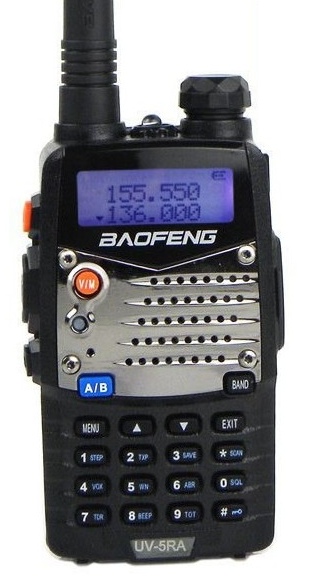
baofeng-uv-5ra-plusUndoubtedly the Baofeng UV-5Rx delivers a lot of radio for your buck. However some models in the range have a bad reputation for the transmitted audio sounding soft and muffled.

In 2013, Remco PA3FYM obtained the schematics of the radio and devised a modification where transistor Q17 of the VOX is re-purposed as preamplifier in the microphone audio circuit. It works wonders for your radio. For people needing a bit more visual guidance, below is a walktrough of how I did this to my Baofeng UV-5RA.

Read More “Better modulation for the Baofeng UV-5RA” »

Hardware

Import/export an Oracle Schema using JDBC

Posted on 2015-01-02 By rolfje No Comments on Import/export an Oracle Schema using JDBC

Everybody gets a database!When doing integration testing or fixing a bug in a piece of Java code that uses Oracle as a database, being able to do quick exports and imports of your schema can be a big help. Sometimes just calling Oracle’s imp/exp commandline tools from your code can be of help, but I was looking for something a bit more portable and less demanding on my local development machine. I found that Oracle’s datapump functionality can be called from stored procedures, which in turn can be called from a normal JDBC statement.

Read More “Import/export an Oracle Schema using JDBC” »

Software

Arduino and the QVGA 2.2″ TFT SPI screen

Posted on 2014-11-17 By rolfje 5 Comments on Arduino and the QVGA 2.2″ TFT SPI screen

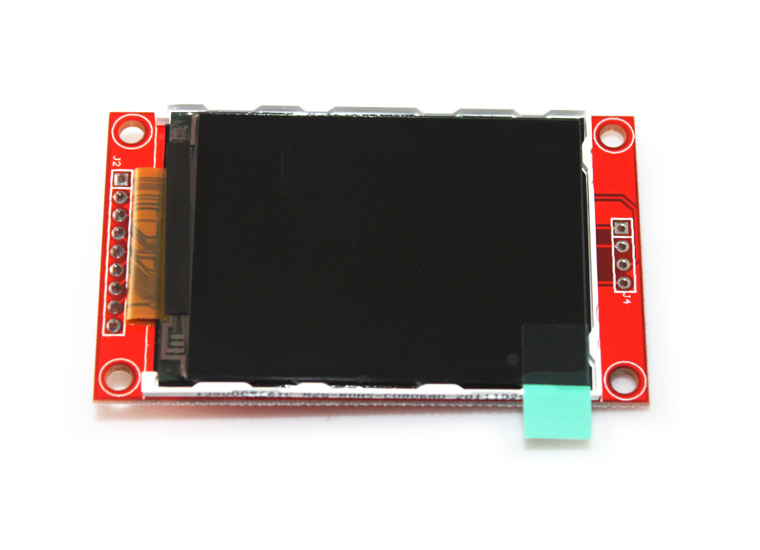
QVGA SPI 2.2" 320x240 screenI went through all the struggles everybody else seems to be going through to get this screen connected to my Arduino Nano. I had the 5V to 3.3V voltage conversion problem, and the “only works with software interrupts” problem which makes the display run slow. The solutions are not complicated but not very wel documented. Until now.

Read More “Arduino and the QVGA 2.2″ TFT SPI screen” »

Hardware, Software

Posts navigation

Previous 1 … 4 5 6 … 37 Next
         
@rolfje.com
www.youtube.com/watch?v=_ZBK...
3 hours ago
@rolfje.com
www.youtube.com/watch?v=anwK...
2 days ago
Reposted by @rolfje.com
@michaelspicer.bsky.social
What if James Bond had to do a few days in the office. Short film below.

youtu.be/hhd0hOIDljA
2 days ago

Recent Comments

  • rolfje on Spring SystemPropertyInitializingBean
  • plinko idle clicker on Spring SystemPropertyInitializingBean
  • rolfje on The podcast problem (fixed)
  • SirenMix on The podcast problem (fixed)
  • egorio on Volkswagen e-Up! 80% charge trick

Tags

Anonimatron Apple backup design DIY DRM eclipse environment fix Fun gmail google hacking hamradio Hardware helicopter iphone ipod iTunes Java Kawasaki Keynote linux modelling motorcycle music news opinion oracle osx photo photography programming repair review security Software technology Time Machine Ubuntu usability Utilities vacation windows Workshop

Categories

  • Apple (107)
  • Divorce (1)
  • Electronics (5)
  • Fun (58)
  • Games (8)
  • Hardware (74)
  • Microsoft (18)
  • Racing (16)
  • Software (144)
  • Uncategorized (69)
  • Workshop (23)

Archives

Brought to you without adds, banners, cookies or tracking. This one is on me. Yes, life can be this good. Pay it forward.
AI policy - Privacy policy

Copyright © 2026 www.rolfje.com.

Powered by PressBook WordPress theme