About a week ago, I was a bit bored and decided to see what Twitter is all about. I created an account, and I Tweeted for a week. I tried to keep to the original idea, where a Tweet should answer the question “What are you doing”? Looking back, my tweets include Coffee, Podcasts, Global frustration, Small joys, Small irritations, Re-tweets, and Replies.
Tag: opinion
Bill’s Mosquitoes
Bill Gates found a very good way to get the news reporters to pay attention to the malaria problem. In his talk at the TED conference, he released a few mosquitoes, stating that malaria should not be just for poor people to experience. People who did not see the whole performance may react shocked, because when placed out of context it sounds like an outrageous thing to do.
If you think that’s the case, you should maybe have a look at his talk, available (for free, without registering) at TED.com. You’ll see that the audience is actually laughing when he releases the mosquitoes, and at the end of the talk Bill gets a standing ovation.
In addition to the malaria problem, Bill also makes a very good case about how important good teachers are, and what we can do to help teachers become just that.
Get well soon
Dear Steve,
Congratulations on the 25th aniversary of the Macintosh. I was sorry to hear that you are not feeling well and took some time off. Try not to worry about work, enjoy the time with your family and take care.
Get well soon,
Rolf
Buddha had a stroke
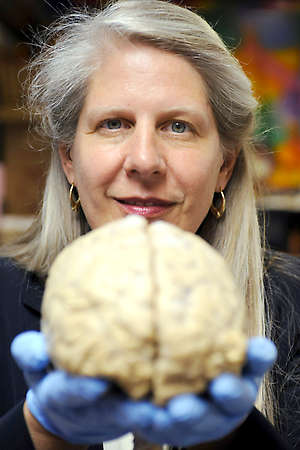
Here’s Jill Bolte Taylor. She’s a brain scientist, studying schyzofrenia, and the micro-circuitry in the human brain which causes these (and other) mental illenesses. On the morning of September 10, 1996 she had a stroke. Amongst all other things that went though her head, she realized that this was a tremendous oportunity because she got to study this phenomena first hand. Luckaly, she fully recovered, wrote a book about it, and did a very impressive presentation about it at the 2008 TED conference, called “a powerful stroke of insight”.
Having watched this presentation, I realized that Zen monks already figured this out a long time ago, without knowing that they were talking about left or right brain halves. Here’s a short recap of what your left and right brain halves do:
We are Free! Free, I tell you!
Regular readers know that I’ve been ranting about the way the music and movie industry are selling us crippled content, which actually feels like punishing you for honestly buying your digital content. Coincidentally, a month after that rant, Steve wrote a mail to the music industry in which he stated that DRM clearly was not working, and we needed to approach things differently.
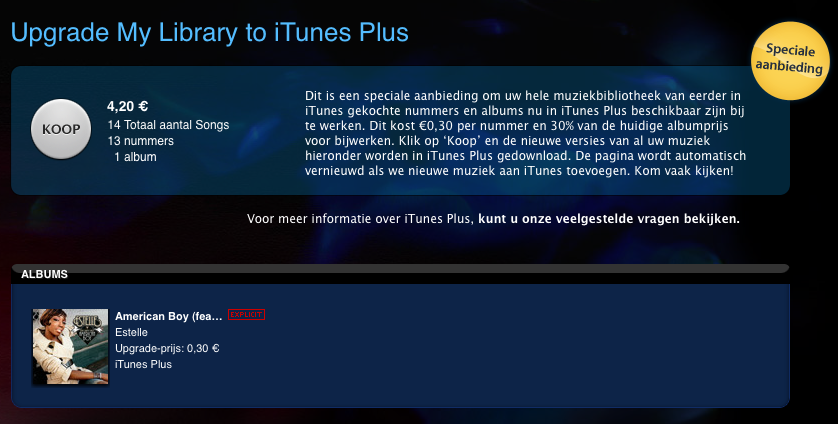
A few months later, Apple and EMI actually started a new service in iTunes called iTunes plus, selling 256kbps DRM-free AAC files. If you’ve seen the latest Macworld 2009 Keynote Address by Philip (Phil) Schiller, you will have noticed that Apple hasn’t been sitting still. At the end of this quarter, all songs in the iTunes store will be available as DRM-free iTunes plus version. And there’s an easy button in iTunes which let’s you upgrade all your DRM-ed music automatically (payed, ofcourse). The link is in the iTunes Quick Links box, top right. I tried it, works fine.
Finally, your music will travel with you and play anywhere, just like those trusty CD’s did. Even better: with your iPhone you’re now able to buy music anywhere you are, because Apple has added 3G to the iTunes store on the iPhone.
Micro Victories
The last few weeks I was frustrated about not being able to write any code for the project I am on at work. My days are filled with email, spreadsheets, documents, discussions and distractions. All important stuff, I’m sure, but none of it has got to do with actual coding.
I tried to write code during the evenings for that project, just to get my kicks. Two things happened:
- Frustration grew, because I feel that this is the kind of work I should be doing during the day.
- As I worked the late night hours, I realized I could never get it all done because the blocks of work were simply to large and required too much research to be done during a few evenings.
Brilliant TV
People who know me know that I’m not a big fan of commercial TV. It hasn’t got any depth, it usually underproduced, overmarketed and makes an insulting assumption on the viewer’s intelligence. (Wow, all in one sentence 🙂 )
So I usually get my information elsewhere. Most of the stuff I find interesting is provided through RSS feeds. Some of it is made available through audio podcasts, which is brilliant when commuting. As for video, youtube looked promising, but the messy interface and sheer overload of people making silly movies with their mobile phones has made it hard for me to find actual interesting video there. The rating system with YouTube did improve the past week, but it’s still hard to find stuff that interests me.
Enter the TED talks. These are brilliant video’s mostly of a presentation, or sometimes music. But generally, the TED talks are just that tiny bit more interesting than TV, without commercials, and with real contents.
Just now I finished watching Mena Trott’s entertaining presentation on how blogs are building a friendlier world. The TED.com site is really clean, easy to browse and contains tons of video’s about remarkable people with very interesting stories to tell. If my TV died, the only way I’d notice is when I switch on my PS3 to play a video game.
Monkeys: How to get rich.
I recently got an email with a brilliant little fairytale about how to trick people into happily giving you all their money. I wanted to share with you, but it was in Dutch, and the origin was cleary not the original author.
Today I was rummaging around the internet to see if I could find the original author, and I did. I found out that the Dutch story was freely translated from an English source. Here’s the original story from that English source, unaltered (and with reference):
Design by Management
A lot of great ideas start in the heads of creative minds. Unbound by budgets, planning, and customers, these ideas are passed around, and some of them turn into projects.
As soon as companies and managers get involved in realizing great ideas which are not really theirs, things can go very wrong. The least that can happen is that something isn’t built. Tomtom on an iPhone? A brilliant idea and technically possible, but non-technical people get in the way.
Take their money, then take the pain
Just to get this out of my system, I’ll tell you what I think of the current crisis in the monetary system. It starts off with a fictional story, and explains why we need to get rid of the monetary system, and why you should have physical gold in your safe.